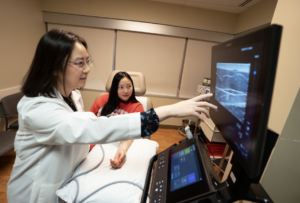

Usage Rights: All content is available for editorial use with attribution to The Ohio State University Comprehensive Cancer Center – Arthur G. James Cancer Hospital and Richard J. Solove Research Institute (OSUCCC – James)

Key takeaways
- The research: An Ohio State clinical trial is testing a custom dynamic contrast-enhanced MRI (DCE-MRI) tool to show within weeks whether chemotherapy is working in patients with pancreatic cancer that may be removable with surgery after treatment.
- Why it matters: About 60% of people with pancreatic cancer don’t qualify for surgery at diagnosis, and current CT scans can’t show early enough whether treatment is shrinking the tumor, when a couple of weeks can change outcomes.
- Potential impact: Earlier, measurable feedback could let doctors switch therapies sooner, sparing patients ineffective treatment and side effects and improving their chances of reaching surgery.
Breakthrough Imaging Tool Slashes Wait Time for Pancreatic Cancer Treatment Decisions
For pancreatic cancer patients, waiting months to learn if chemotherapy is shrinking a tumor can mean missing the narrow window for life-saving surgery. Now, researchers at The Ohio State University Wexner Medical Center and The Ohio State University Comprehensive Cancer Center – Arthur G. James Cancer Hospital and Richard J. Solove Research Institute (OSUCCC – James) have developed an advanced MRI-based measurement tool (DCE-MRI) that determines whether chemotherapy is working within weeks rather than months, boasting 98% accuracy.
Led by medical oncologist Shafia Rahman, MD, and radiology scientist Harrison Kim, PhD, this breakthrough addresses a critical gap: conventional CT scans often take months to reveal tumor response. By detecting cellular and vascular changes early, oncologists can promptly pivot therapies if a drug fails or fast-track responding patients into surgery. The story features survivor Paul Cress, an active pilot and classic-car enthusiast who was diagnosed with an asymptomatic tumor, highlighting how aggressive monitoring and cutting-edge cancer science save lives.